
Your skin usually tells you when something is off. A cleanser that never bothered you suddenly burns. Makeup pills over dry patches. The corners of your nose stay red, your cheeks flush easily, and even water can sting. Many people call this “sensitive skin,” but in practice, I often see a different issue underneath it: a barrier that's been pushed past what it can comfortably handle.
That can happen after too many active ingredients, a harsh cleanser, over-exfoliation, weather shifts, or even well-intentioned professional treatments when aftercare isn't matched to what the skin needs. The good news is that barrier repair skincare can help. The less comfortable truth is that most advice people get is incomplete. “Stop actives and use a thick moisturizer” is a start, but it's often not enough for true repair.
Table of Contents
- The Rise of Red Sensitive Skin
- What Is Your Skin Barrier Anyway
- How the Skin Barrier Becomes Damaged
- Your At-Home Barrier Repair Skincare Routine
- When to See a Provider for Barrier Repair
- Proactive Barrier Care and Long-Term Health
- Barrier Repair FAQs
The Rise of Red Sensitive Skin
A common pattern goes like this. Someone wants brighter, smoother skin, so they add an acid toner, a retinoid, a vitamin C serum, and a stronger cleanser. For a short time, the routine feels productive. Then the skin turns reactive. It looks shiny but feels tight. It flakes in some areas and breaks out in others. Nothing seems to “soothe” it for long.
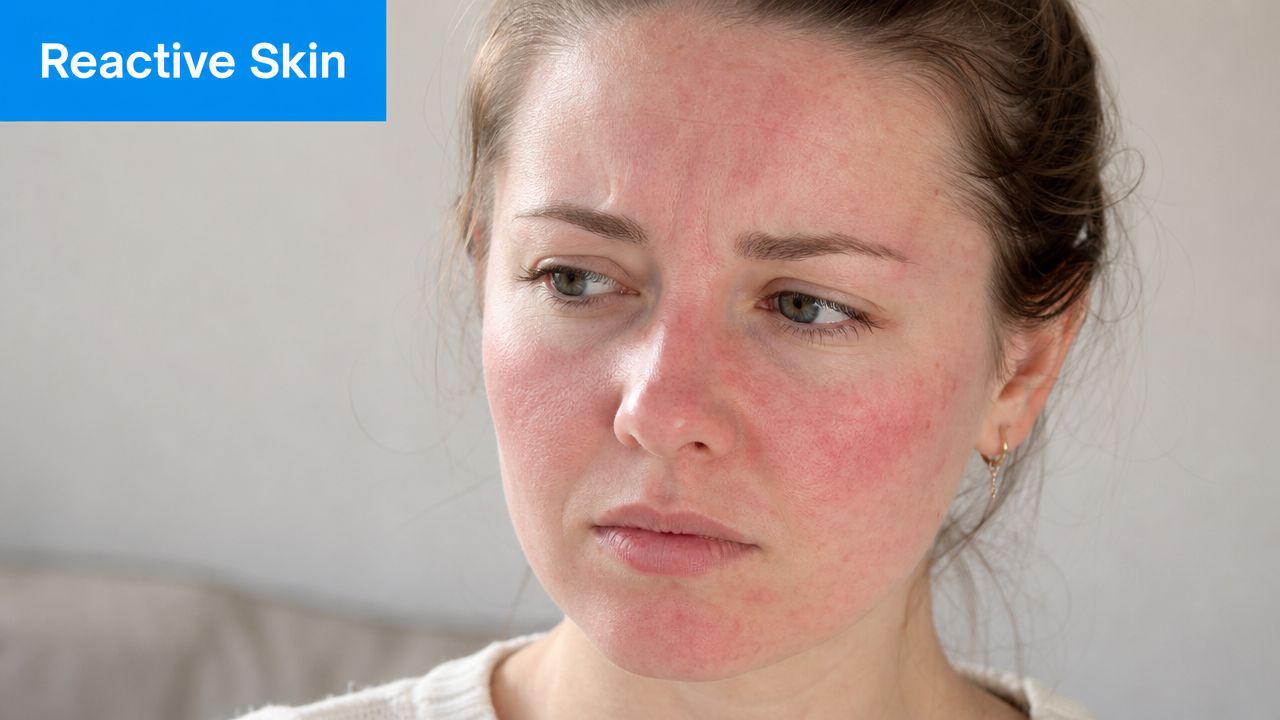
That experience isn't niche anymore. Interest in barrier repair skincare has grown alongside a broader shift toward prevention and skin health. The global barrier repair skincare market was valued at $870 million in 2024 and is projected to reach $1,361.27 million by 2033, expanding at a 5.10% CAGR, reflecting growing awareness of the barrier's role in defending against pollutants and allergens, according to barrier repair market analysis.
Why this keeps happening
Patients are using more products than ever, and many of those products are designed to do something active. Exfoliate. Resurface. Brighten. Unclog. Tighten. Those goals aren't wrong, but skin can't stay calm if every step pushes it harder.
Professional treatments can add to the confusion. Procedures such as microneedling and chemical peels can be appropriate in the right patient with the right plan, but they temporarily challenge the barrier by design. If someone already has reactive skin, treating the surface problem without rebuilding the foundation usually backfires.
Clinical reality: Red, stinging skin doesn't always need “more moisture.” It often needs fewer insults and more precise repair.
People also underestimate how quickly the cycle reinforces itself. Once the barrier is impaired, products that were previously tolerated can start to sting. That leads to product hopping, overcorrection, and more inflammation. What looks unpredictable is often very predictable from a barrier standpoint.
What Is Your Skin Barrier Anyway
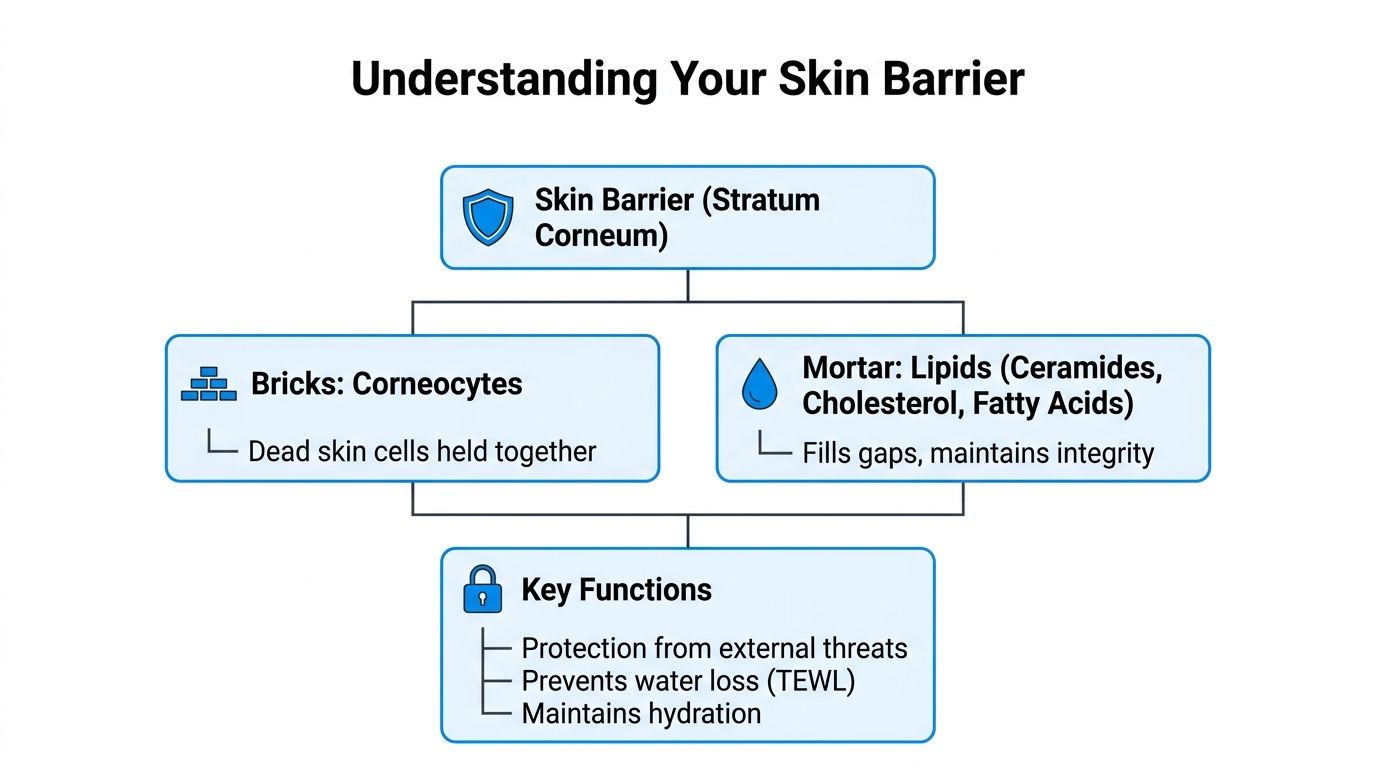
The easiest way to understand the barrier is to think of the outermost skin layer as a wall. The skin cells are the bricks. The lipids between them are the mortar. When the mortar is intact, skin holds water better and screens out irritants more effectively. When that mortar is depleted or disorganized, water escapes and irritants get in.
Think bricks and mortar
The “bricks” are corneocytes, flattened cells in the stratum corneum. The “mortar” is a lipid mixture that includes ceramides, cholesterol, and fatty acids. Together, they help maintain structure, reduce water loss, and support skin comfort.
When patients tell me their skin feels dry and oily at the same time, this model usually explains it. A damaged barrier can leave skin dehydrated while also making it look greasy or congested. More oil doesn't mean a healthier barrier. Sometimes it means the skin is stressed.
Here's what a healthy barrier does every day:
- Keeps water in: It limits transepidermal water loss so skin stays flexible and comfortable.
- Keeps irritants out: It reduces penetration of triggers that can cause burning, itching, and redness.
- Supports treatment tolerance: It helps skin handle active ingredients and procedures more predictably.
The four layers that matter
Barrier function is broader than just dryness. The skin barrier has four interdependent layers: physical, chemical, microbiologic, and immunologic, and effective repair has to support all four. In that same framework, acidic moisturizers in the pH 4.0 to 5.0 range support ceramide production, and ceramides make up about 50% of barrier lipids, as outlined in this review on skin barrier function and moisturization.
A simple breakdown helps:
| Layer | What it does | Why it matters when skin is irritated |
|---|---|---|
| Physical | Forms the structural outer shield | Weak structure means easier water loss |
| Chemical | Maintains surface acidity and enzyme function | Wrong pH can interfere with repair |
| Microbiologic | Supports healthy surface microorganisms | Disruption can increase reactivity |
| Immunologic | Helps regulate inflammatory responses | Instability can amplify redness and sensitivity |
A barrier isn't just a dry-skin issue. It's a whole defense system.
That's why a routine that only feels heavy on the skin can still fail. If it doesn't support structure, pH, lipid replenishment, and calm inflammation, patients often feel temporarily coated but do not feel better.
How the Skin Barrier Becomes Damaged
Barrier damage is usually cumulative. One scrub won't affect everyone. One retinoid application won't affect everyone. But repeated friction, strong cleansers, multiple actives, inconsistent sun protection, and frequent product changes can wear down tolerance.
The skin does try to rescue itself. After barrier damage, it starts a self-repair response quickly by releasing stored lipids. But that response still depends on having the right building blocks available and stopping the ongoing trigger. Topically applied ceramides can directly support that process, as explained in this review of skin barrier physiology.
Common ways patients disrupt the barrier
Some causes are obvious. Some are hiding in routines people think are “clean” or “advanced.”
- Over-exfoliation: Acids, scrubs, cleansing brushes, or too many resurfacing products in the same week.
- Harsh cleansing: Foaming cleansers that leave skin squeaky can strip what compromised skin is trying to hold onto.
- Too many actives at once: Retinoids, vitamin C, exfoliating acids, and acne products can be reasonable individually, but the mix matters.
- Environmental stress: Cold air, dry indoor heat, wind, and sun exposure all make repair harder.
- Procedure-related disruption: Peels and microneedling can temporarily impair the barrier, which is why realistic aftercare matters. If you're trying to understand expected recovery after a peel, this overview of chemical peel downtime is a useful reference.
For patients trying to support dryness gently at home, I also like simple education that doesn't overcomplicate the basics. This guide to natural skin hydration gives practical context on hydration support without turning recovery into a 10-step project.
How to recognize a compromised barrier
The symptoms are usually easy to describe, even if people don't know the name for what's happening:
- Burning after bland products
- Persistent tightness after washing
- Redness that lingers
- Flaking with simultaneous congestion
- Skin that suddenly “can't tolerate anything”
If your routine keeps getting gentler but your skin keeps getting angrier, the problem may be barrier integrity, not a lack of product.
That distinction matters. It changes the plan from “add more” to “remove friction, then rebuild.”
Your At-Home Barrier Repair Skincare Routine
A good home routine for barrier repair skincare should feel almost boring. That's usually a positive sign. The goal is to reduce variables, lower irritation, and give skin the raw materials it needs to repair.
What to stop right away
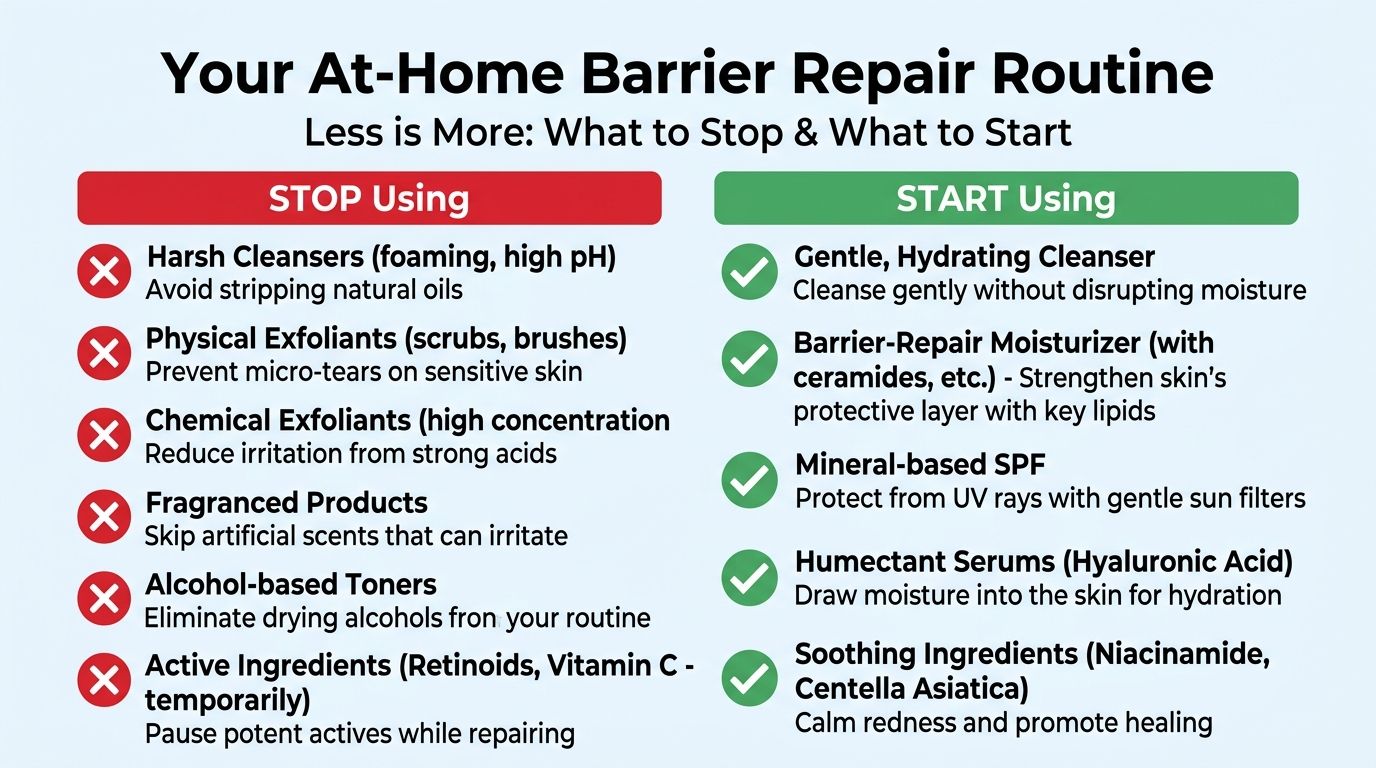
When skin is actively reactive, restraint works better than ambition.
- Pause exfoliants: Set aside acid toners, resurfacing pads, peels, and scrubs.
- Pause retinoids and strong antioxidants: Even well-formulated products can sting compromised skin.
- Avoid fragranced products: Fragrance isn't tolerated well by many patients in the middle of a flare.
- Drop stripping cleansers: If skin feels tight right after washing, the cleanser is too aggressive for the moment.
- Stop experimenting: Recovery gets delayed when people swap products every few days.
This is also the phase where people make a common mistake. They stop their actives but replace them with the thickest cream they can find. That may reduce discomfort for a few hours, but it doesn't always repair the underlying lipid problem.
What to start instead
Keep the routine short and consistent.
Use a gentle cleanser
Cleanse with a low-irritation formula that removes sunscreen and debris without leaving that squeaky finish.Add water-binding support
A simple hydrating serum can help if it's non-irritating. Look for humectant support rather than “treatment” claims.Choose a barrier-focused moisturizer
This is the step that matters most. You want a formula aimed at lipid replenishment, not just surface coating.Protect with sunscreen
If UV exposure continues while the barrier is compromised, the recovery window gets longer and the skin stays more inflamed.
A lot of patients also benefit from reviewing ingredient logic rather than chasing trend products. Resources on effective skin barrier solutions can help you learn what to look for in a repair-oriented formula. If you're also trying to support skin quality overall, there's useful context in this guide on how to stimulate collagen production naturally, especially when planning what to reintroduce later.
Why thick moisturizer alone often fails
This is the nuance often overlooked. True barrier repair requires more than a simple thick moisturizer. It needs a specific 3:1:1 ceramide-to-cholesterol-to-fatty-acid ratio to better mimic the skin's natural lipid structure and trigger self-repair mechanisms, as discussed in this explanation of barrier repair principles.
That doesn't mean every patient needs to memorize a formula. It means you shouldn't assume that “heavier” equals “better.”
Consider the trade-offs:
| Approach | What it can do | What it may miss |
|---|---|---|
| Plain occlusive balm | Reduces surface water loss temporarily | May not provide the lipid balance needed for true repair |
| Humectant-only serum | Adds water attraction | Can fall short if there's no lipid support to hold that moisture |
| Barrier-focused moisturizer | Supports replenishment and structure | Still won't work well if irritants remain in the routine |
One practical option patients may discuss during a consultation is ZO Skin Health, which ProMD Health Ashburn uses as a medical-grade skincare line in broader skin health plans. The value isn't that any brand is magic. It's that well-constructed barrier products tend to be more deliberate about ingredient balance and tolerability.
More product isn't better. Better formulation is better.
When to See a Provider for Barrier Repair
At-home care is appropriate for mild, clearly triggered irritation. It's not enough for every case. If symptoms keep cycling despite a simplified routine, you may be dealing with more than temporary product irritation.
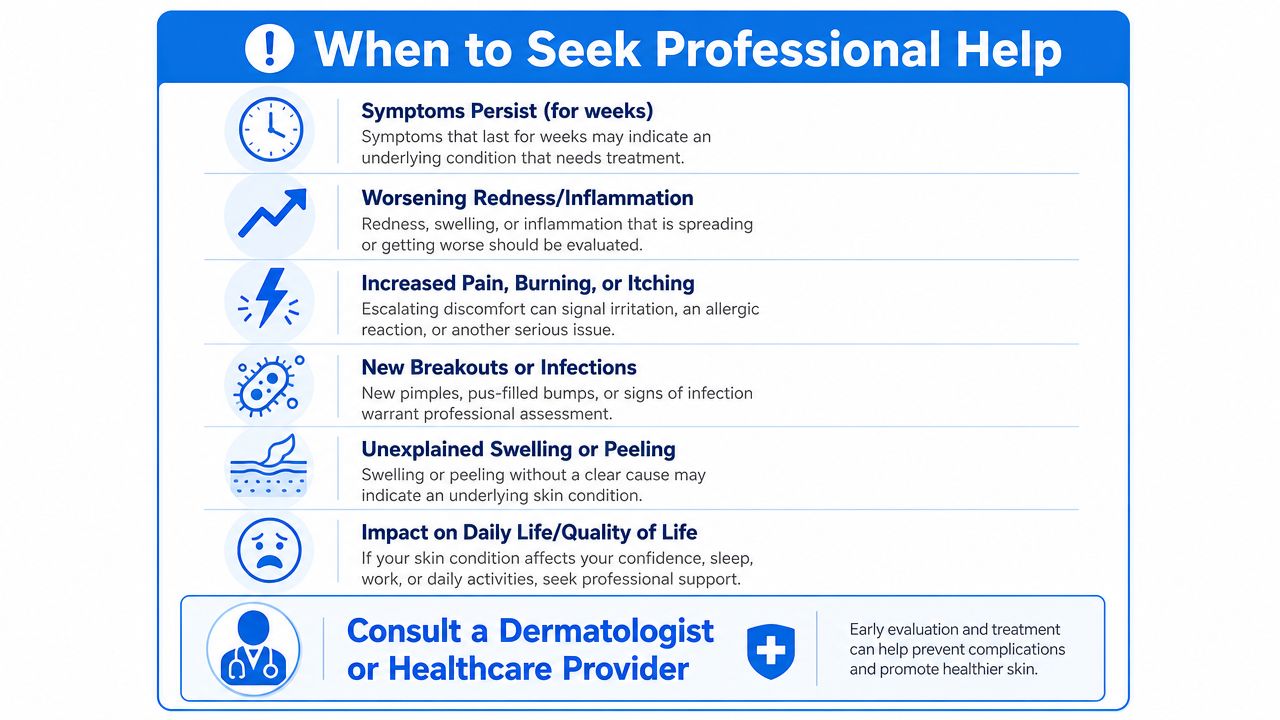
Red flags that deserve an evaluation
Some problems look like a damaged barrier but behave differently in clinic. Rosacea, eczema-pattern inflammation, seborrheic dermatitis, and acne flares can overlap with barrier symptoms.
Consider an appointment if you notice:
- Symptoms that persist for weeks: A routine reset should help. If it doesn't, the diagnosis may be incomplete.
- Burning, itching, or pain that's intensifying: Skin that worsens on a bland routine needs a closer look.
- Swelling, crusting, or oozing: Those signs move beyond typical irritation.
- Repeated reactions after procedures: Treatment planning may need to change, not just aftercare.
- A pattern of redness plus breakouts: That combination often confuses patients and benefits from professional assessment.
How we think about barrier support in practice
In a medical aesthetic setting, the job isn't to push skin harder just because a patient wants fast results. The job is to match treatment intensity to barrier status.
That matters with services like The Perfect Peel and Microneedling. Both can be useful in the right plan, but timing is critical. If the barrier is already unstable, it's usually smarter to calm and rebuild first. For patients considering regenerative options, it's worth reviewing how microneedling with PDGF fits into a medically supervised skin strategy before booking anything that adds more controlled injury.
A consultation also helps sort out what belongs in the plan and what doesn't. Sometimes the right answer is a temporary product reset. Sometimes it's adjusting treatment spacing. Sometimes it's identifying an underlying inflammatory condition instead of calling everything “sensitive skin.”
Good aesthetic care respects the barrier first. Better-looking skin usually follows.
Proactive Barrier Care and Long-Term Health
Once skin is calmer, the next mistake is rushing back to the exact routine that caused the problem. Long-term success comes from reintroducing intensity slowly and keeping barrier support in place even after the irritation fades.
How to reintroduce actives without repeating the cycle
Bring products back one at a time. Give each one enough time to prove that your skin tolerates it. If you restart multiple actives together, you won't know what's helping and what's provoking a reaction.
A practical approach looks like this:
- Start with one active: Choose the product that matters most to your goals.
- Keep the rest of the routine simple: Gentle cleanser, barrier-supportive moisturizer, sunscreen.
- Watch for subtle warning signs: Tightness, delayed burning, and new flaking count, even before obvious redness shows up.
- Adjust frequency before strength: Many patients do better with less frequent use rather than immediately switching to a stronger formula.
A long view of skin health
Barrier health also depends on ordinary habits. Consistent sun protection, enough hydration, avoiding over-cleansing, and managing stress all make skin less reactive over time. None of those are glamorous, but they matter.
If you've had repeated setbacks, a personalized plan is often more efficient than more trial and error. That's especially true if you're balancing cosmetic goals with sensitive or post-procedure skin.
Barrier Repair FAQs
How long does barrier repair take
It depends on the cause. Recovery from simple over-exfoliation may take a few weeks, while damage from in-office therapies like peels or microneedling can create permeability dysfunction that lasts significantly longer and may require extended maintenance with physiological lipids, according to this barrier repair timeline discussion.
The key point is that not all barrier damage is the same. A person who used too many acids at home shouldn't expect the same recovery pattern as someone healing after a procedure.
Is slugging enough to repair the barrier
Slugging can help reduce surface water loss because occlusive products limit evaporation. That can make skin feel more comfortable. But comfort isn't the same as complete repair.
If the skin is missing the lipid components needed for structural recovery, slugging alone may leave you coated but still unstable underneath. It's a support step, not a full strategy.
Should I stop every active ingredient
Usually, yes, during the acute repair phase. When skin is burning, stinging, or peeling unpredictably, the priority is stabilization. After things settle, actives can often be reintroduced carefully.
If you can't tell whether a product is helping or hurting, pause it.
Can I still get professional treatments while my barrier is damaged
That's usually not the right time. If your skin is already inflamed and reactive, adding another controlled treatment often prolongs the problem. In-office procedures tend to work best when the baseline barrier is healthy enough to recover normally.
Does diet matter
Diet isn't a stand-alone fix for an impaired barrier, but overall nutrition and hydration do support skin function. I'd treat diet as a background support, not the main intervention.
What's the biggest mistake people make
They assume that less irritation automatically means repair. Sometimes they stop the obvious triggers but keep using products that only sit on top of the skin. Real progress usually comes from doing both parts well: removing the ongoing damage and using formulas that support actual lipid restoration.
If your skin stays red, reactive, or difficult to tolerate despite simplifying your routine, a customized plan can save a lot of frustration. ProMD Health Ashburn Med Spa offers medically guided aesthetic care that can help you decide when to pause treatment, when to rebuild your routine, and when to reintroduce options like microneedling, peels, or medical-grade skincare more safely.