

Why More Women Are Turning to Microneedling for Hair Loss
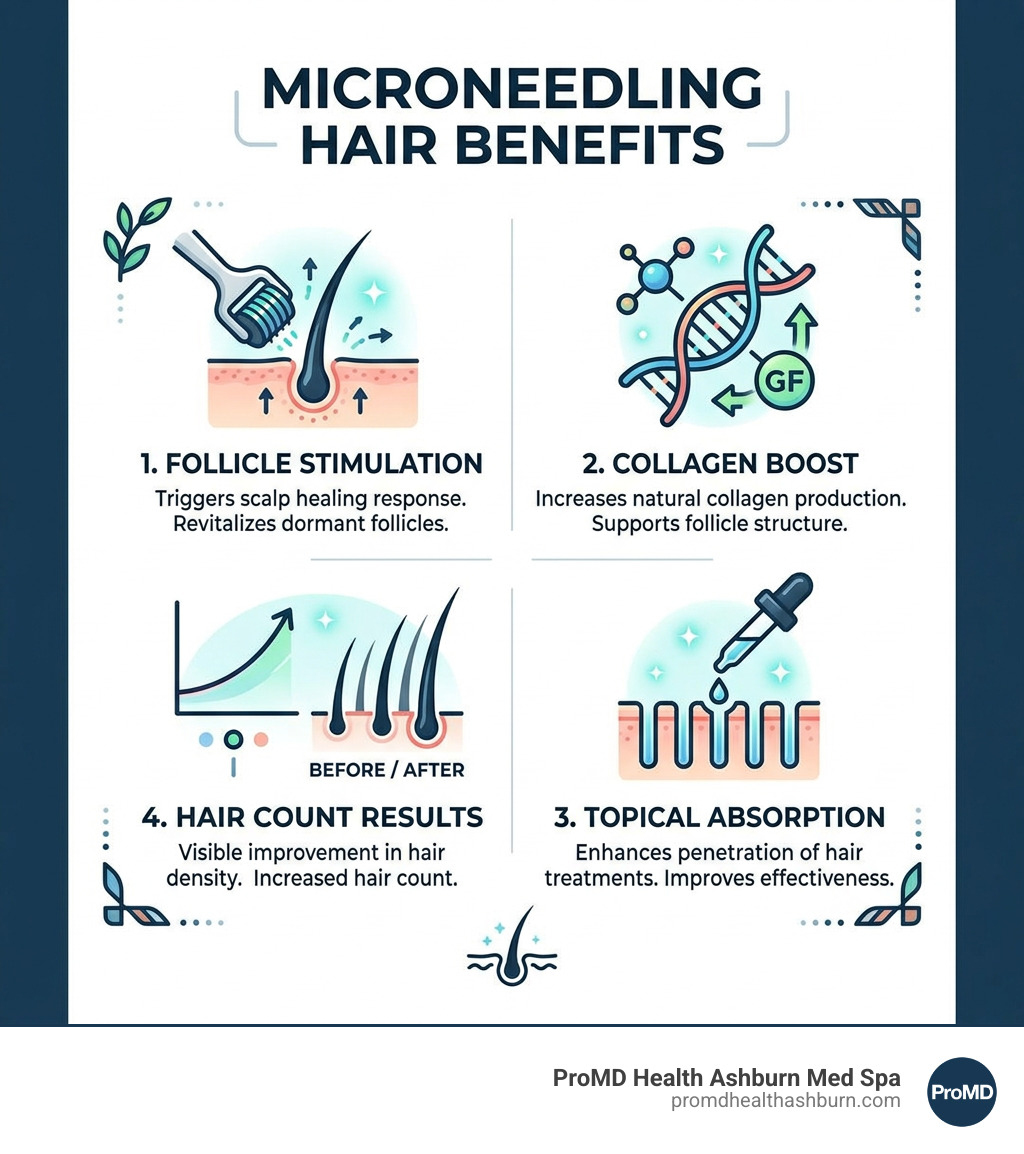
Microneedling benefits hair in several clinically studied ways. Here’s a quick summary:
- Stimulates hair follicles by triggering the scalp’s natural healing response
- Boosts collagen and growth factors that support hair follicle health
- Increases blood flow to the scalp, feeding dormant follicles
- Enhances absorption of topical treatments like minoxidil — dramatically improving their effectiveness
- Works for multiple hair loss types, including androgenetic alopecia and alopecia areata
- Results typically visible within 2–3 months of consistent treatment
Hair thinning is one of those things that sneaks up on you. One day your ponytail feels thinner, or you notice more strands on your pillow. For many women in their 40s, it’s a quiet source of stress — one that feels hard to talk about and even harder to treat.
The good news? There’s a science-backed, minimally invasive option that’s gaining real traction in dermatology: scalp microneedling.
Using ultra-fine needles to create controlled micro-injuries on the scalp, microneedling activates the body’s own repair mechanisms — collagen production, increased blood flow, and growth factor release. Research shows it can meaningfully improve hair density and thickness, especially when paired with treatments like minoxidil or platelet-rich plasma (PRP).
This isn’t a trendy spa gimmick. Clinical studies have found that patients using microneedling alongside minoxidil saw a mean hair count increase of 91.4 hairs over 12 weeks — compared to just 22.2 hairs with minoxidil alone.
I’m Aisha Hasan, PA-C, a Physician Assistant at ProMD Health Ashburn with specialized experience in aesthetic medicine, including treatments that support the microneedling benefits hair restoration patients are looking for. In this guide, I’ll walk you through exactly how it works, what the research says, and how to know if it’s right for you.
The Science of How Microneedling Benefits Hair
To understand how microneedling benefits hair, we have to look beneath the surface of the scalp. Microneedling, also known as collagen induction therapy, involves using a device equipped with fine, medical-grade needles to create thousands of microscopic punctures in the skin.
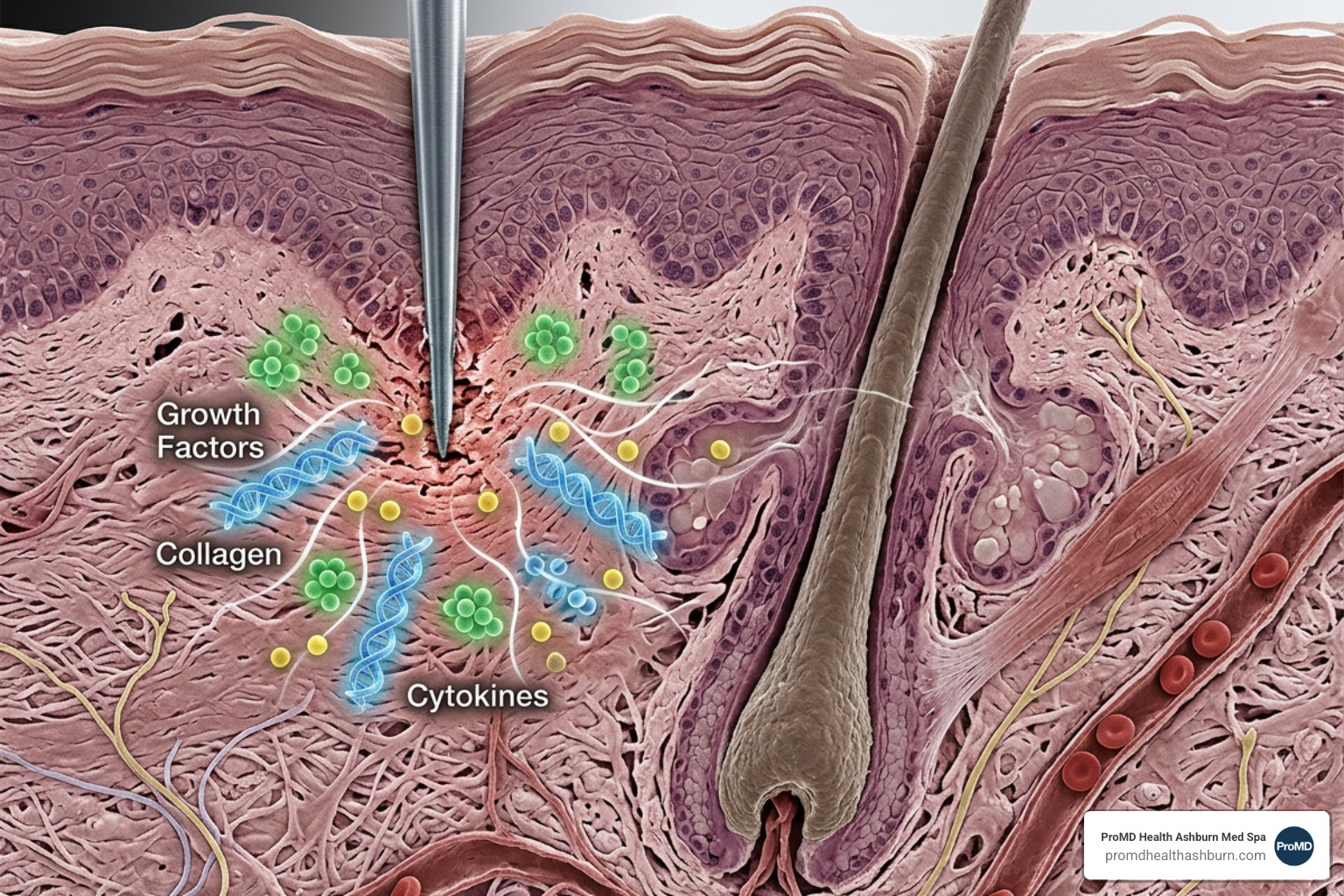
While “puncturing your scalp” might sound like something out of a horror movie, these are “controlled micro-injuries.” They are just deep enough to trigger a healing cascade without causing permanent damage. When these tiny channels are created, the body rushes to repair them, releasing a cocktail of regenerative proteins.
The scientific research on microneedling for hair loss points to several key biological pathways:
- Growth Factor Release: The micro-injury triggers the release of Platelet-Derived Growth Factor (PDGF) and Vascular Endothelial Growth Factor (VEGF). These are essential for neovascularization—the formation of new blood vessels—which brings oxygen and nutrients to starving follicles.
- WNT/β-catenin Pathway: Studies in animal models have shown that repeated microneedling upregulates the Wnt/β-catenin pathway. This is a fancy way of saying it “wakes up” stem cells in the hair follicle bulge, encouraging them to enter the anagen (growth) phase.
- Collagen and Elastin Induction: Just as it does for facial rejuvenation, microneedling strengthens the dermal structure around the hair follicle, providing a healthier “soil” for hair to grow in.
- DHT Modulation: Some evidence suggests that the wounding response may help modulate levels of dihydrotestosterone (DHT) locally. Since DHT is the primary hormone responsible for shrinking follicles in pattern baldness, reducing its impact is a huge win.
Efficacy for Androgenetic Alopecia and Other Conditions
We often see patients who feel they’ve tried everything. The beauty of microneedling is its versatility across different types of hair thinning.
- Androgenetic Alopecia (AGA): This is the most common form of hair loss (male and female pattern baldness). Research consistently shows that microneedling benefits hair count and thickness in AGA patients, especially when they’ve previously plateaued on minoxidil alone.
- Alopecia Areata (AA): This autoimmune condition causes patchy hair loss. While more research is needed, preliminary studies suggest microneedling can help “reset” the follicle environment and encourage regrowth in these patches.
- Telogen Effluvium (TE): Often triggered by stress, illness, or hormonal shifts (like menopause), TE results in excessive shedding. Microneedling helps by extending the anagen phase and increasing the hair shaft diameter of the new hair that grows back.
Clinical Evidence: A Quick Comparison
| Treatment Group | Mean Hair Count Increase (12 Weeks) | Patient Satisfaction (>50% Improvement) |
|---|---|---|
| Minoxidil 5% Alone | 22.2 hairs | 10.5% |
| Microneedling + Minoxidil 5% | 91.4 hairs | 82% |
Data source: Dhurat et al., A Randomized Evaluator Blinded Study of Effect of Microneedling in Androgenetic Alopecia.
Maximizing Results with Combination Therapies
While microneedling is powerful on its own, we rarely use it in a vacuum at ProMD Health Ashburn. Think of microneedling as “tilling the soil.” Once the ground is open, it’s the perfect time to add “fertilizer.”
The microchannels created during the procedure remain open for a short window, significantly increasing the permeability of the scalp. This allows topical treatments to reach the follicle bulb directly rather than sitting on the surface of the skin. To learn more about our comprehensive approach, check out more info about hair restoration at our clinic.
Maximizing Microneedling Benefits Hair Growth with PRP and Exosomes
One of the most effective ways to boost the microneedling benefits hair growth is to combine the procedure with Platelet-Rich Plasma (PRP) or Exosomes.
Platelet-Rich Plasma (PRP): We draw a small amount of your blood, spin it in a centrifuge to concentrate the platelets, and then apply this “liquid gold” to your scalp during and after the microneedling process. These platelets are packed with signaling proteins that support the follicular niche and regenerative capacity. When delivered through microneedling channels, PRP can increase hair density by approximately 15–20% compared to baseline.
Exosomes: Exosomes are the newest frontier in microneedling services. These are tiny extracellular vesicles that act as the “messengers” of the cellular world. They contain a much higher concentration of growth factors and signaling molecules than PRP. Adding exosomes to a microneedling session can dramatically accelerate the transition of follicles from the dormant phase back into the active growth phase.
Professional Procedure, Safety, and Aftercare
At ProMD Health Ashburn, we prioritize safety and precision. A professional scalp microneedling session isn’t just about “rolling a tool” over your head; it’s a medical procedure.
The Protocol:
- Consultation: We start by diagnosing your hair loss type. We even offer the Entity Med AI Simulator to help you visualize potential outcomes.
- Preparation: We apply a medical-grade topical anesthetic to the scalp 15–45 minutes before we begin. This ensures the treatment is comfortable.
- The Procedure: We use a motorized microneedling pen with sterile, single-use cartridges. We typically use a needle depth between 0.5mm and 1.5mm, depending on the thickness of your scalp and the severity of thinning. The actual needling takes about 15–20 minutes.
- Infusion: We apply PRP, exosomes, or specialized growth serums to the treated area.
- Aftercare: We provide a specific plan to protect your scalp while it heals. For those interested in maintaining their scalp health, we often recommend medical grade skincare products specifically formulated for sensitive, post-procedure skin.
Professional Treatments vs. At-Home Derma Rolling
It is very tempting to buy a $20 derma roller online and try this at home. However, there are significant risks and limitations to DIY treatments:
- Needle Quality and Angle: At-home rollers use a wheel mechanism. As the needles roll, they enter and exit the skin at an angle, which can cause “track-mark” tearing and permanent scarring. Professional pens use a vertical “stamp” motion that creates clean, precise channels.
- Depth: Consumer devices are often capped at 0.25mm. While this helps with product absorption, it doesn’t go deep enough to reach the hair follicle bulb or trigger the wound-healing cascade necessary for regrowth.
- Infection Risk: The scalp is home to a lot of bacteria. Without medical-grade sterilization (70% isopropyl alcohol isn’t always enough for deep needles) and a sterile environment, you risk folliculitis or serious infections.
- FDA Regulation: Professional devices are FDA-cleared medical tools. Many at-home devices are unregulated and may use inferior metals that cause allergic reactions.
Ideal Candidates and Scalp Aftercare
Most people experiencing early-to-mid-stage thinning are excellent candidates. However, you should avoid microneedling if you:
- Are pregnant or breastfeeding.
- Have an active scalp infection, psoriasis, or eczema.
- Are on blood thinners (which can cause excessive bruising).
- Have a history of keloid scarring.
The 5-Day Recovery Window: After your session, your scalp will look and feel like it has a mild sunburn. Here is how to handle the aftercare:
- Day 1-2: Do not wash your hair. Avoid sweating or heavy exercise.
- Day 3: You can wash with a gentle, sulfate-free shampoo.
- Sun Protection: Your scalp will be very sensitive to UV rays. Wear a hat when outdoors for at least a week.
- No Chemicals: Avoid hair dyes or harsh chemical treatments for at least 7 days.
Frequently Asked Questions about Scalp Microneedling
How many sessions are needed to see results?
Hair restoration is a marathon, not a sprint. Because the hair growth cycle is slow, you won’t see results overnight. Most patients require 3 to 6 sessions, spaced about 4 weeks apart. You will typically start to notice “peach fuzz” or improved density around the 2 to 3-month mark. Once you achieve your desired results, we recommend a maintenance session every 4 to 6 months.
Does microneedling for hair loss hurt?
We get this question a lot! Because we use a potent numbing cream, most patients describe the sensation as a light tingling or a “scratchy” feeling rather than sharp pain. The scalp is less sensitive than the face in many areas. You might feel some tightness or “sunburn” warmth for 24 hours afterward, but it rarely interferes with daily activities.
What is the typical cost of treatment?
The cost of microneedling benefits hair treatments varies based on whether you add PRP or exosomes. In the Ashburn area, a single professional session typically ranges from $200 to $700. While this is an investment, it is often more cost-effective than surgical hair transplants, which can cost upwards of $10,000. When you consider that a 12-week study showed a 4x increase in hair count compared to minoxidil alone, the professional value becomes clear.
Conclusion
At ProMD Health Ashburn Med Spa, we believe that you shouldn’t have to just “accept” hair thinning as an inevitable part of aging. The science is clear: microneedling benefits hair by harnessing your body’s own regenerative powers to wake up dormant follicles and thicken existing strands.
Whether you are just starting to notice a wider part or you’ve been struggling with thinning for years, our team is here to help. We combine medical expertise with the latest technology—including our AI-powered personalized outcome visualization—to create a plan that works for your unique biology.
Ready to see what’s possible for your hair? Explore our more info about hair restoration services and schedule your consultation at our Ashburn, VA location today. We can’t wait to help you restore not just your hair, but your confidence.